← All case studies
Fig. 05 · UNAM · 2018 to 2020

Rehab Glove, UNAM

A sensor glove that turned post-stroke hand therapy into a game, plus a study design that could tell whether it worked.

Role
Lead Researcher & Project Manager, UNAM Neurorehabilitation Laboratory
When
2018 to 2020, during my Ph.D. at UNAM
Built with
A sensor glove on Bluetooth circuit boards I designed, playing Unity games on a phone
Team
Engineers, Unity developers, psychologists and occupational therapists; I led the research team

The story · five parts

01Constraint

A rehabilitation project spread across engineers, Unity developers, psychologists and occupational therapists, each with its own agenda, and patient progress that had to be measurable.

02Intervention

As the project's only Ph.D. student, I designed the studies so conclusions could be drawn, briefed the software team on the behavioral principles the games had to use, and designed the Bluetooth circuit boards for the glove.

03Measured

Time to recover hand dexterity, with the game versus without it.

04Result

Post-stroke patients using the game recovered faster (lab data, not published).

05What it proves

I design the measurement before the build.
Evidence

Fig. 05.1 · Silent loop, 7.5 s, two parts · no patients or faces shown

The glove in 7.5 seconds

Hand movement in, game input out.

  1. 1/2The glove. Sensor lines along the fingers, wired to the circuit boards in the wrist case.
  2. 2/2The game. The same glove controlling a game on a phone over Bluetooth.

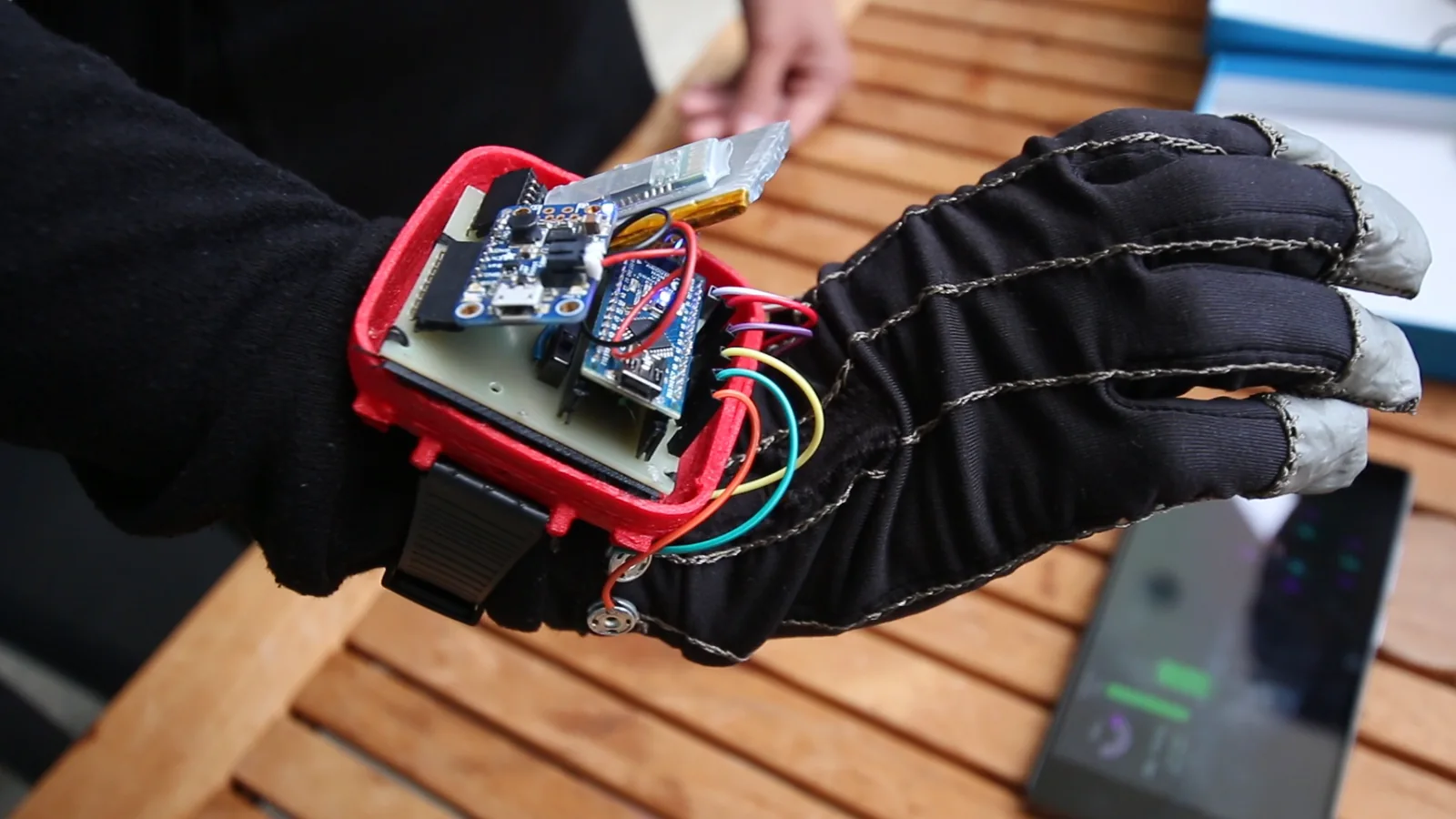
The hardware

A wired sensor glove with an open red wrist case showing its circuit boards, on a table at a 2018 conference.
Fig. 05.2 · Wrist case open, circuit boards visible · ABAI convention, 2018
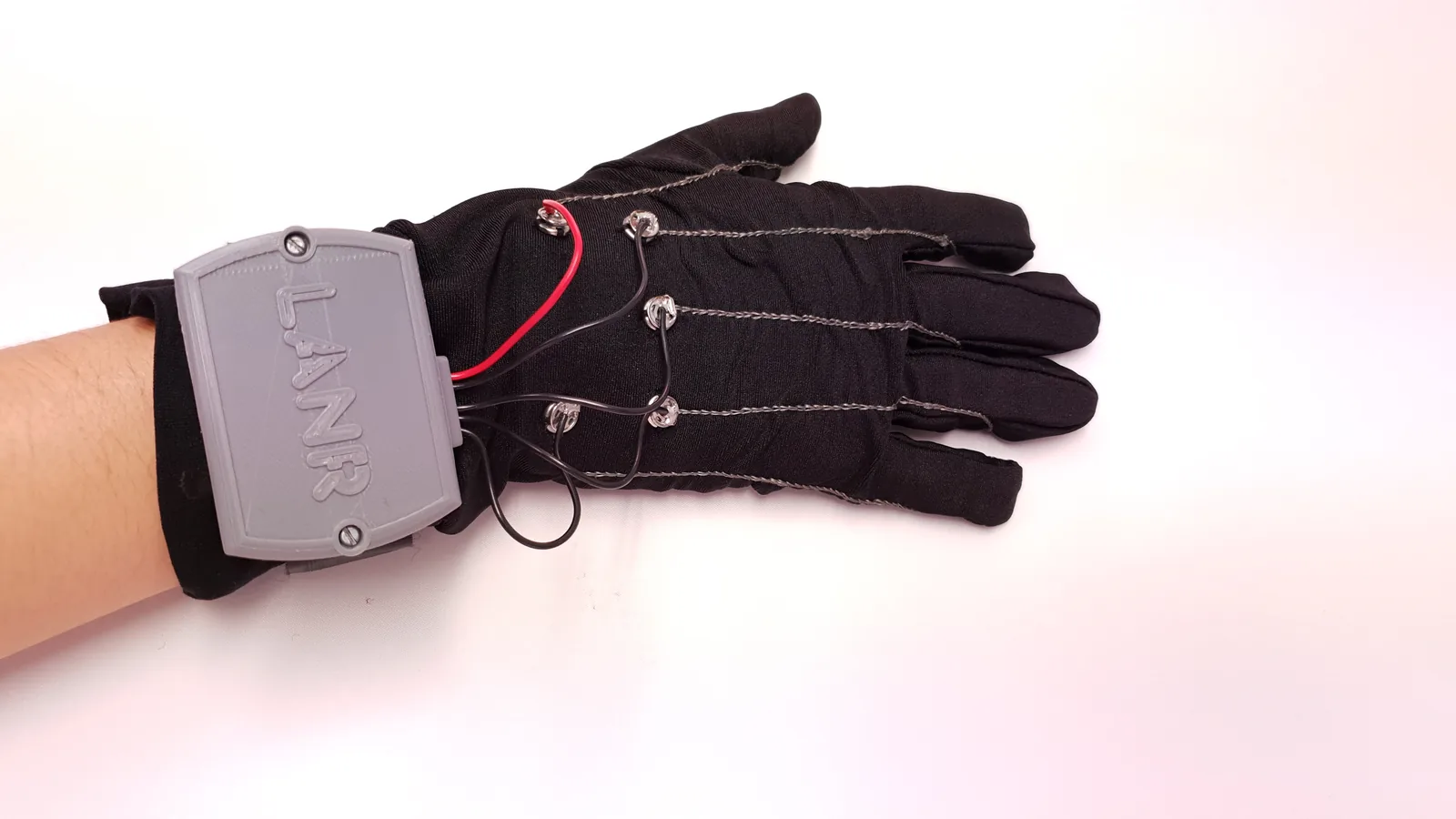
Black sensor glove with stitched conductive lines and a grey LANR-branded wrist module, on a white background.
Fig. 05.3 · The LANR switch glove: stitched conductive lines and a closed wrist module

Measurement first, before the glove

Before and alongside this project, I built and published low-cost lab instruments for behavioral research, so experiments could be run and measured on hardware any lab could afford.

  1. 2015 · Journal of the Experimental Analysis of Behavior · 57 citationsLow-cost USB interface for operant research using Arduino and Visual BasicEscobar & Pérez-Herreradoi:10.1002/jeab.135
  2. 2018 · Mexican Journal of Behavior AnalysisA mobile interface using Android® devices for operant laboratory coursesPérez-Herrera, Escobar & Gutiérrezdoi:10.5514/rmac.v44.i1.65352